
In the age of digital communication, juggling multiple SIM cards can feel like a high-stakes game of Twister. But fear not, iPhone 13 users! Changing your primary and secondary SIM is as easy as pie—if pie had a few tricky steps. Whether you’re switching carriers, managing work-life balance, or just trying to keep your social life organized, mastering this task can save time and headaches.
Overview of SIM Management on iPhone 13
Managing SIM cards on the iPhone 13 offers users flexibility and convenience. Users can set up two different SIM cards, allowing one for work and another for personal use. Each SIM card can be assigned specific labels such as “Personal” and “Work” for easy identification.
The iPhone 13 utilizes dual SIM technology, which includes one physical SIM card and one eSIM. This feature enables users to maintain two separate plans and switch between them seamlessly. Switching from one SIM to another requires simple navigation through the device settings.
To choose a primary SIM, users can go to Settings, then Cellular. Here, they can select which line to use for data and which one will be the default for calls and texts. This setting helps ensure that contacts and messages appear under the correct label.
Managing SIM preferences becomes intuitive after initial configuration. Users can switch between SIM cards as needed by accessing the cellular settings. This process allows for a tailored communication experience, optimizing balance between work and personal life.
Notifications on the iPhone 13 help users identify which line they are using for outgoing calls or texts. Users should also note that carrier compatibility might affect eSIM functionality. Many mobile carriers support dual SIM features, but not all.
Through efficient SIM management, users can enhance their communication strategies. Understanding how to navigate these settings provides significant advantages, making it easier to engage with both personal and professional networks. As demands grow, mastering these functionalities adds value to the iPhone 13 experience.
Steps to Change Primary SIM
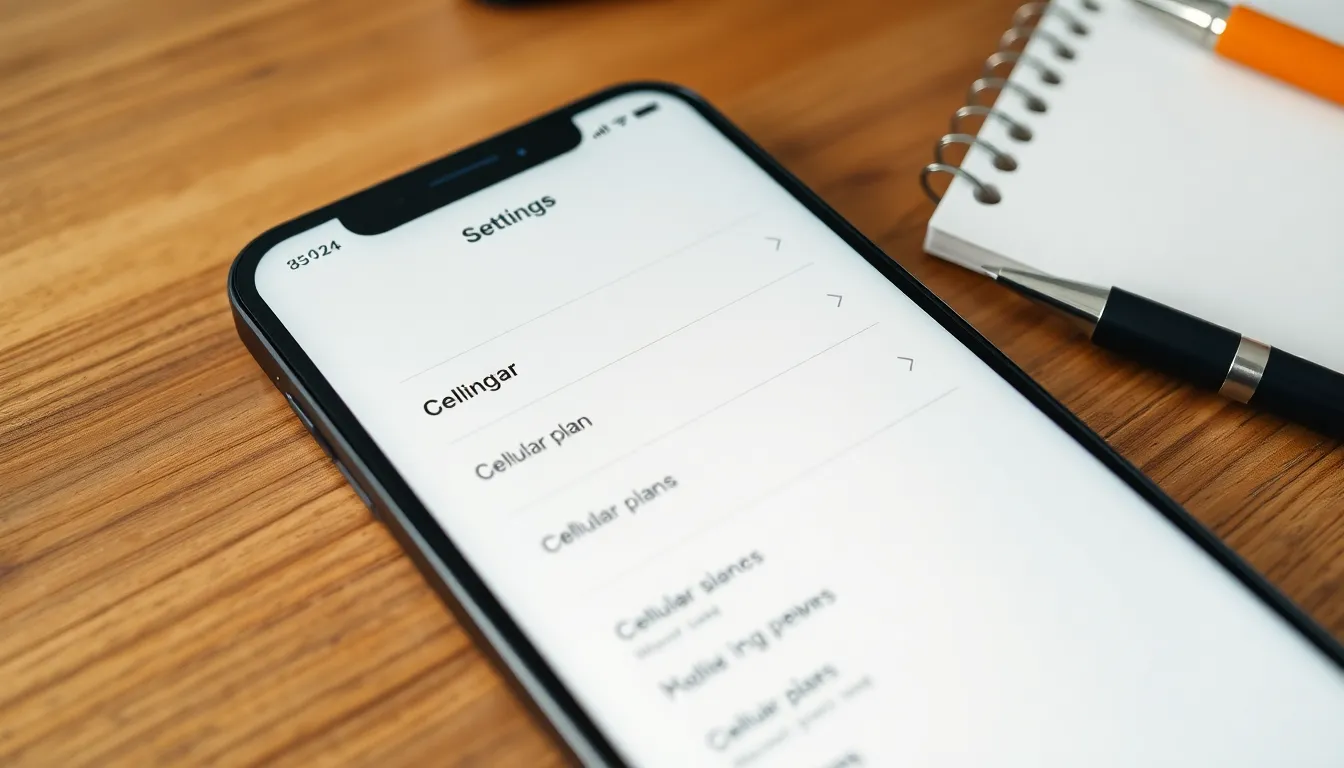
Changing the primary SIM on an iPhone 13 involves straightforward steps. Users can quickly transition between SIM cards to enhance communication efficiency.
Accessing Settings
Start by locating the Settings app on the iPhone 13. Tapping the app opens the Settings menu. Scroll down to find Cellular options. Selecting this tab provides access to SIM configurations. A brief look reveals both cellular plans available on the device. Users can easily navigate through these options to make necessary changes.
Selecting Cellular Plans
Cellular Plans appear in the Cellular settings. Choose the plan users wish to modify from the list displayed. Each plan is labeled for easy identification, making it simple to differentiate between work and personal lines. After selecting a plan, insights about its current settings become visible. This step ensures users understand which plan will be set as the primary SIM.
Designating the Primary SIM
Designating the primary SIM takes just a few taps. After selecting the desired plan, find the option to set it as the default. Users designate this SIM for cellular data, calls, and text messages. Confirming this selection finalizes the change, allowing the chosen SIM to operate as the primary line. Notifications will indicate which SIM is active for any given communication.
Steps to Change Secondary SIM
Changing the secondary SIM on the iPhone 13 is simple, requiring only a few steps to navigate the settings effectively.
Accessing Settings
To get started, users should locate the Settings app on their home screen. Tapping on the app opens the main settings menu. Cellular options appear as users scroll down the list. Selecting Cellular allows them to manage both SIMs from one accessible location. This section displays their current SIM configurations.
Selecting Cellular Plans
In the Cellular section, users will notice options for their cellular plans. Each plan is labeled for easy identification, promoting streamlined management. By tapping on the desired plan, they can view its details. This includes options to designate it as a secondary SIM.
Designating the Secondary SIM
Users should tap on the specific plan they want to designate as secondary. After selecting it, they can choose settings related to calls, texts, and data use. Switching this designates it as the secondary line, ensuring communications flow seamlessly across both SIMs. Users can easily return to this section to make changes as needed.
Tips for Managing Dual SIMs
Managing dual SIMs on the iPhone 13 simplifies communication. Consider labeling each SIM for easy identification. Users can assign clear names like “Work” and “Personal” to differentiate them quickly. When choosing which SIM to use for data, it helps to set the preferred SIM in Settings. Notifications provide clarity by indicating which line is active, ensuring users stay informed.
Explore the Control Center to switch between SIMs effortlessly. Swipe down from the upper-right corner of the screen to access the Quick Settings. Tapping on the cellular icon allows users to choose the active SIM without navigating through Settings.
Ensure carrier support when activating the eSIM. Some carriers may have specific requirements for dual SIM usage. Checking with the provider before making changes can prevent compatibility issues. Users should verify that the correct plans are activated to avoid service interruptions.
Monitor usage for each SIM to manage costs effectively. Tracking data usage helps allocate budgets appropriately, especially when using different plans for work and personal use. Adjusting plan options based on usage patterns can lead to savings.
Understand the limitations of dual SIM technology. For instance, using one SIM for calls may restrict simultaneous use of the other SIM for data. Learning how each SIM operates helps in making informed decisions about communications.
Updating the iOS version adds new features and improves functionality related to dual SIM management. Regular updates ensure the best possible performance. Users should routinely check for updates to take advantage of enhancements that simplify the dual SIM experience.
Troubleshooting Common Issues
When managing dual SIMs on an iPhone 13, users may encounter several common issues. One frequent problem arises when switching between SIMs. If the primary SIM isn’t recognized after switching, restarting the device often resolves this.
Another issue involves cellular data not functioning on the selected SIM. Users should check their cellular settings to confirm that the correct SIM is selected for data. They can verify this by navigating to Settings, then Cellular, and ensuring the preferred data SIM is properly assigned.
Occasionally, users may experience difficulties with call or text notifications. Ensuring notifications are enabled for both SIMs is essential. Accessing Settings, then Notifications, allows users to customize alerts for each line, ensuring they remain informed about incoming communications.
While using eSIM, some users report activation problems. Verifying carrier support for eSIM activation can help, as some carriers may not fully support this feature. Users should reach out to their carrier for assistance if they encounter issues.
Compatibility problems with certain networks may affect performance as well. Checking if both SIM cards are compatible with iPhone 13 is important for optimal functionality. Users can look up carrier compatibility guides provided by Apple for this purpose.
Monitor call quality as well. Users may experience dropped calls if signal strength is weak. Testing the SIM cards in different areas can help determine if the issue is location-based.
Addressing these common troubleshooting matters improves overall experience with the iPhone 13’s dual SIM feature. Managing settings effectively and staying informed about each SIM’s details enhances communication and connectivity.
Mastering the process of changing primary and secondary SIMs on the iPhone 13 can significantly enhance communication management. By understanding the steps involved users can easily switch between work and personal lines without hassle. The convenience of dual SIM technology provides flexibility that meets today’s communication needs.
Effective SIM management not only streamlines calls and texts but also helps users stay organized. With the right approach users can enjoy seamless connectivity and balance their personal and professional lives. Embracing this technology ultimately adds value to the iPhone 13 experience making it a powerful tool for modern communication.