Desserts have a magical way of transforming any meal into a celebration. Whether it’s a fluffy soufflé or a decadent chocolate mousse, mastering dessert techniques can elevate even the simplest of sweets into culinary masterpieces. But let’s face it—nobody wants to spend hours in the kitchen, only to end up with a sad, flat cake that looks more like a pancake than a dessert.
Overview of Dessert Techniques
Dessert techniques play a crucial role in creating delightful treats. Understanding processes like baking, freezing, and tempering enhances flavor and texture. Mastery of these methods allows for innovation and creativity in dessert preparation.
Baking involves precise measurements and appropriate ingredient combinations. Adjusting baking times and temperatures influences results, such as cake rise and browning. Techniques like creaming and folding also affect the final product, contributing to lightness and moisture.
Freezing offers another method that preserves freshness and enhances texture. Gelato and sorbet require careful ingredient selection to achieve creaminess. Utilizing appropriate churn times impacts the smoothness of the dessert.
Tempering chocolate is fundamental for achieving a glossy finish and snap. Temperatures must be monitored closely during this process to ensure stability and prevent bloom. Properly tempered chocolate elevates confections, adding aesthetic appeal.
Other techniques include glazing, which adds a shiny layer to desserts, and whipping, essential for incorporating air into mixtures. These methods result in light mousses or fluffy whipped creams, enhancing the overall presentation.
Flavor balancing also plays an important role. Incorporating elements like acidity or spices can elevate the taste profile. Cohesive flavor combinations create memorable desserts that resonate with diners.
Each technique provides room for exploration. Experimenting with different methods leads to unique dessert creations, allowing the chef to express personal style. Mastery of dessert techniques serves as a gateway to making impressive, delectable sweets that captivate audiences.
Essential Tools for Dessert Making
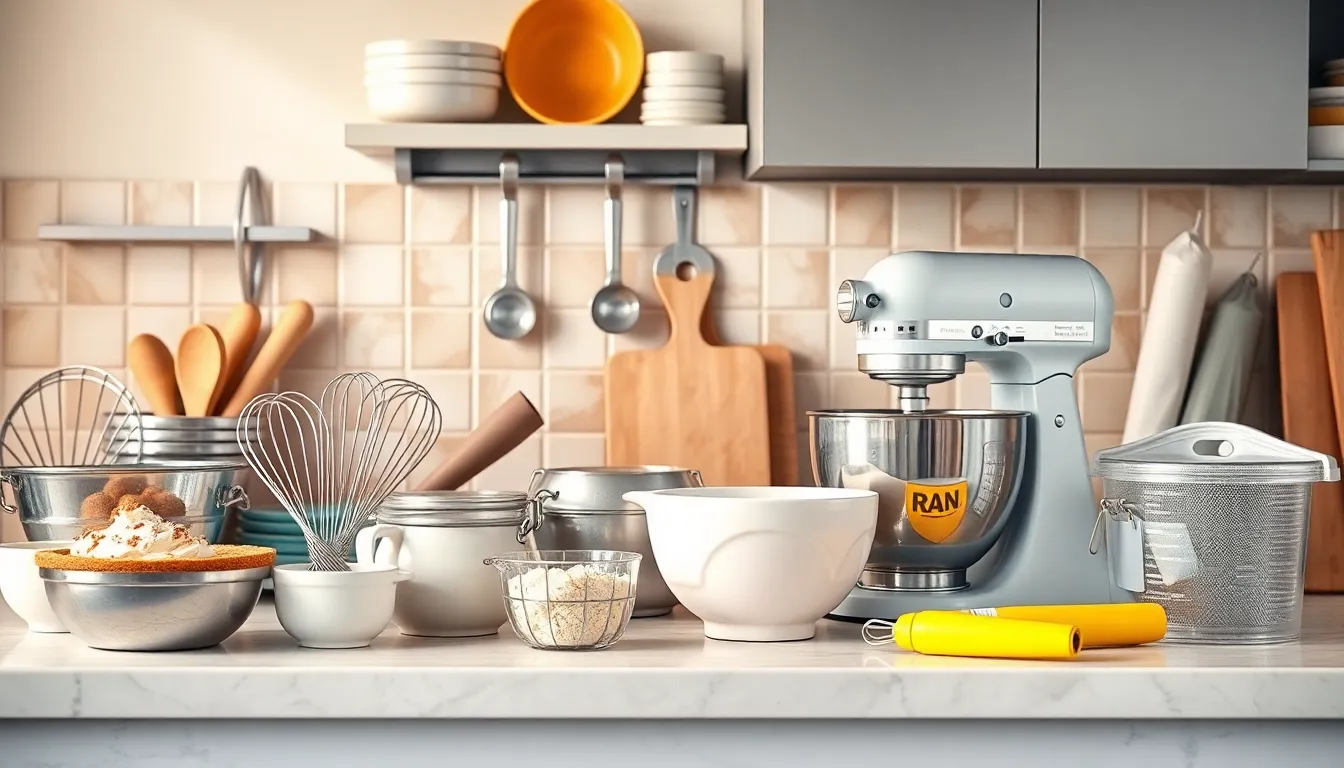
Having the right tools simplifies dessert preparation and enhances the final product. These tools enable creativity and precision in crafting delectable treats.
Must-Have Utensils
Common utensils play a vital role in dessert making. Mixing bowls come in various sizes for efficient ingredient combination. Measuring cups and spoons ensure accuracy, which is crucial for successful recipes. Whisks facilitate smooth mixtures, while spatulas aid in scraping and folding. Baking trays and sheets are essential for cookies, cakes, and pastries. Cooling racks allow baked goods to cool evenly, preventing sogginess. A rolling pin is useful for flattening dough, and pastry brushes help with glazing. Each of these tools contributes to a seamless cooking experience.
Specialty Equipment
Specialty equipment elevates dessert-making capabilities. Stand mixers streamline the process of whipping, kneading, and mixing dough for intricate recipes. Silicone mats provide a non-stick surface for candy-making and pastry work. A candy thermometer is critical for monitoring sugar temperatures, especially when making caramels or toffees. Piping bags enable precise decoration of cakes and desserts, while food processors assist in creating fine textures or crusts. Sifters improve flour distribution, leading to lighter cakes. Investing in these tools enhances dessert quality and expands culinary possibilities.
Classic Dessert Techniques
Classic dessert techniques form the backbone of sweet creation, showcasing skill and precision. Mastering these methods leads to impressive results.
Baking Fundamentals
Baking involves using specific measurements and ingredient combinations for success. Temperature control and timing play crucial roles in achieving the desired outcome. Ingredients like flour, sugar, and eggs interact during the process, resulting in a variety of textures and flavors. Using the right baking tools ensures consistency, while techniques such as creaming and folding incorporate air for optimal lift. Understanding how to mix properly can prevent common issues like a dense cake.
Pastry Techniques
Pastry techniques require attention to detail and a gentle touch. Techniques include rolling, folding, and chilling, which contribute to flaky textures in items like pie crusts and puff pastries. Chilling dough prevents sticking and maintains the structure during baking. Flour types vary, affecting the final product, with all-purpose and pastry flour serving different purposes. Additionally, working with butter at the correct temperature enhances flavor. Techniques related to filling, shaping, and baking pastries can elevate the overall dessert experience.
Modern Dessert Techniques
Modern dessert techniques combine creativity with scientific principles, pushing the boundaries of traditional baking and dessert creation.
Molecular Gastronomy
Molecular gastronomy transforms desserts through the use of scientific methods. Chefs utilize techniques such as spherification and foaming to create unique textures and presentations. Spherification involves encapsulating liquids within a gel-like sphere, producing bursts of flavor. Foaming incorporates air into liquids, creating airy textures like bubbles that enhance desserts visually and texturally. These innovative methods engage diners on multiple sensory levels, turning simple desserts into interactive experiences. Perfecting these techniques requires precision and knowledge about the chemical interactions in food.
Deconstruction Methodology
Deconstruction methodology involves breaking down traditional desserts into their component parts. This technique allows chefs to reassemble familiar flavors in unexpected ways. For example, a deconstructed cheesecake may present cheesecake filling alongside a crumbly crust and fruit puree, inviting diners to explore each element separately. The approach encourages creativity in presentation and flavor combinations. By focusing on flavors rather than traditional forms, this methodology sparks curiosity and enhances the dining experience, providing a fresh take on beloved classics.
Tips for Perfecting Dessert Techniques
Mastering dessert techniques calls for attention to several key elements. Focus on precision in measurements, as accurate ingredient ratios lead to consistent outcomes. Use high-quality ingredients where possible; fresh produce and premium chocolate significantly enhance flavor.
Experiment with temperatures, knowing that oven heat impacts baking times and results. Adjust baking times based on the specific type of dessert; thicker items like cakes require longer baking compared to delicate pastries.
Incorporate air into mixtures efficiently through techniques like creaming and folding. Whipping egg whites to soft peaks can boost volume in soufflés, while gentle folding helps maintain lightness in batters.
Rest and chill doughs and batters when required. Techniques such as chilling pastry dough lead to flaky textures in crusts, while certain batters benefit from resting to improve moisture distribution.
Practice patience when tempering chocolate. Heating chocolate gradually maintains its glossy finish and prevents seizing. Working with a candy thermometer provides precise temperature readings, essential for successful results.
Explore modern techniques creatively. Molecular gastronomy opens up new avenues for producing unique desserts through spherification and foaming. Implementing deconstruction allows for fresh presentations and flavor surprises.
Use the right tools for each task. Specialty equipment like stand mixers and silicone mats simplifies preparation and enhances the final product. Invest in quality utensils for cutting, mixing, and decorating to achieve professional presentations.
Continuously taste and adjust flavors as needed. Balancing sweetness, acidity, and spice keeps desserts exciting. Learning these tips will help anyone elevate their dessert-making skills effectively.
Mastering dessert techniques opens the door to a world of creativity and flavor. With the right skills and tools anyone can transform simple ingredients into stunning confections that impress and delight.
By understanding the fundamentals of baking and exploring modern methods like molecular gastronomy chefs can elevate their dessert game significantly. Precision in measurements and quality ingredients play a crucial role in achieving the desired results.
Experimenting with different techniques and flavors not only enhances the dessert experience but also allows for personal expression in the kitchen. Embracing these techniques will lead to memorable desserts that leave a lasting impression on every occasion.