In a world where takeout menus are just a click away, mastering culinary skills might seem like a daunting task. But fear not! Cooking isn’t just for chefs in tall hats; it’s an adventure waiting to happen in every kitchen. Whether you’re aiming to impress a date or simply want to avoid another night of instant noodles, learning the art of cooking can be both fun and rewarding.
Understanding Culinary Skills
Culinary skills encompass a variety of techniques and knowledge related to food preparation and cooking. Mastering these skills leads to a deeper appreciation for cooking.
Definition of Culinary Skills
Culinary skills refer to the ability to prepare, cook, and present food. These skills include fundamental techniques like chopping, sautéing, and baking. Knowledge of ingredients and their uses plays a crucial role in effective cooking. Chefs and home cooks alike utilize recipes, but creativity and adaptation are equally important. Gaining these skills allows individuals to create both simple and complex dishes.
Importance of Culinary Skills
Culinary skills enhance daily living by promoting healthier eating habits. Individuals with cooking skills can control ingredients, reducing unhealthy additives. In addition, cooking at home can be more cost-effective than dining out. These skills also foster creativity, allowing for personalized meal preparations. Social connections grow through shared meals, as cooking provides opportunities for gatherings. Therefore, developing culinary skills cultivates overall well-being and enhances life quality.
Types of Culinary Skills
Culinary skills encompass a broad spectrum of techniques essential for food preparation and cooking. These skills can be categorized into basic cooking techniques and advanced culinary techniques.
Basic Cooking Techniques
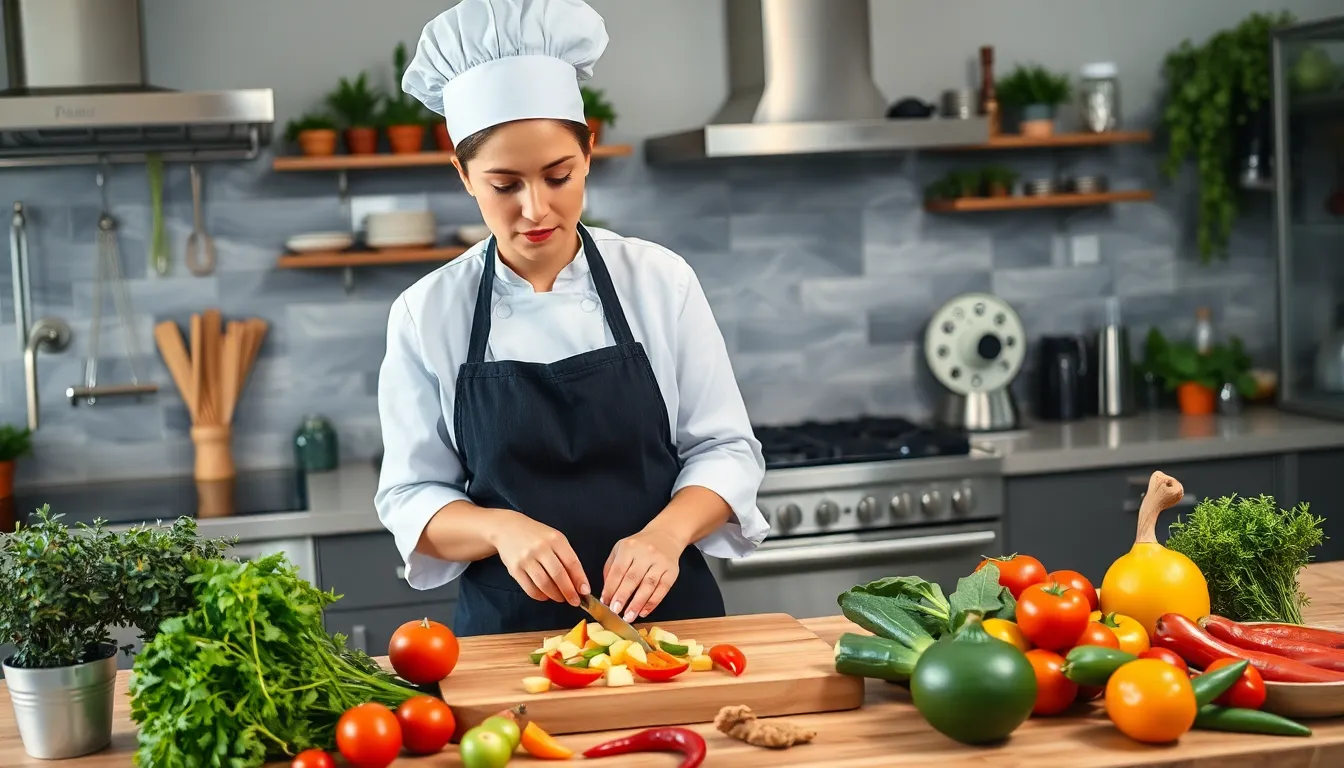
Basic cooking techniques form the foundation of culinary skills, allowing individuals to prepare meals efficiently. Skills like boiling, sautéing, and baking are essential. Understanding how to chop vegetables and cook grains also contributes to meal quality. Mastery of these techniques ensures consistency and flavor in dishes. Techniques such as steaming and broiling further enhance methods for healthy cooking. Mastering these straightforward skills can lead to delicious outcomes.
Advanced Culinary Techniques
Advanced culinary techniques elevate cooking to an art form. Techniques like sous vide and molecular gastronomy allow for innovative food preparation. Understanding emulsification improves sauces and dressings significantly. Skills such as fermentation create unique flavors and enhance preservation. Knife skills, including intricate cuts, showcase precision in food presentation. Mastering these advanced techniques provides opportunities for creativity and experimentation in the kitchen.
Developing Your Culinary Skills
Culinary skills can continuously evolve, helping individuals become more proficient in the kitchen. Knowledge of essential tools and resources significantly enhances this journey.
Essential Tools and Equipment
Quality kitchen tools make a noticeable difference in cooking efficiency. A chef’s knife provides precision for various cutting tasks, while a cutting board offers a stable surface. Non-stick cookware simplifies cooking and cleanup, allowing for easy meal preparation. Additionally, measuring cups and spoons ensure accurate ingredient portions, critical for consistent results. A reliable blender can be instrumental in making sauces, smoothies, or soups, showcasing versatility. Kitchen gadgets like peelers, timers, and thermometers contribute to a seamless cooking experience. As individuals invest in these tools, they build a foundation for mastering culinary skills.
Recommended Cooking Resources
Several resources support skill development and inspire creativity in cooking. Online cooking classes provide hands-on instructions, taught by seasoned chefs. Books on culinary techniques offer comprehensive insights, including both fundamental and advanced methods. Cooking blogs and websites present diverse recipes accompanied by instructional videos, making the learning process engaging. Social media platforms promote culinary creativity, showcasing dish presentations and cooking tips. Additionally, community cooking groups foster collaboration and learning through shared experiences. These resources create an enriching environment for honing culinary skills.
Culinary Skills in Professional Settings
Culinary skills play a crucial role in professional environments, influencing various aspects of food preparation and service.
Roles in the Culinary Industry
Culinary professionals encompass a wide range of roles, each requiring specific skills. Chefs lead kitchen operations, ensuring menu execution and high food quality. Line cooks focus on preparing specific dishes during service, mastering techniques for speed and consistency. Pastry chefs specialize in baking and dessert creation, emphasizing precision and artistry. Catering managers oversee large events, coordinating food logistics and client communications. Additionally, food critics evaluate dining experiences, providing insights into culinary execution and quality. Each position demands culinary expertise to create memorable dining experiences and uphold industry standards.
Culinary Education and Training
Culinary education forms the backbone of professional kitchen success. Culinary schools offer formal training programs, teaching students essential skills and techniques. Programs often include hands-on experiences in restaurant settings, allowing students to apply classroom knowledge in real-world situations. Additionally, apprenticeships provide opportunities to learn under seasoned chefs, fostering mentorship and practical learning. Online courses have become increasingly popular, offering flexibility for those pursuing culinary knowledge. Continuing education workshops allow professionals to stay updated on trends and techniques. Overall, a solid educational background enhances career prospects and skill sets in the culinary field.
Benefits of Mastering Culinary Skills
Mastering culinary skills offers numerous benefits that enhance the cooking experience. Two primary advantages include healthier eating habits and enhanced creativity.
Healthier Eating Habits
Cooking at home allows individuals to control ingredients effectively, leading to healthier meal choices. By selecting fresh produce and whole foods, it becomes easier to avoid processed ingredients and unhealthy additives. Recipes can be tailored to meet specific dietary needs or preferences, promoting overall well-being. Mastering cooking techniques ensures that meals are nutritious and flavorful, encouraging a balanced diet. Moreover, individuals gain a better understanding of portion sizes and preparation methods, further contributing to healthier eating patterns.
Enhanced Creativity
Culinary skills foster creativity in meal preparation and presentation. Experimenting with flavors and ingredients sparks innovation, allowing cooks to create unique dishes. Adjusting recipes opens up endless possibilities, empowering individuals to make meals that reflect personal tastes. Creativity also extends to plating, where presentation becomes an art form that enhances the dining experience. Seasonal ingredients inspire new recipes, encouraging exploration of diverse cuisines. Ultimately, mastering culinary skills transforms cooking from a routine task into an imaginative outlet.
Mastering culinary skills opens up a world of possibilities in the kitchen. It transforms cooking from a mundane task into an enjoyable adventure filled with creativity and exploration. By honing these skills, individuals can create healthier meals while also discovering new flavors and techniques.
Investing time in learning both basic and advanced cooking methods not only enhances meal quality but also fosters a deeper appreciation for the art of cooking. With the right tools and resources, anyone can elevate their culinary journey. Embracing this journey leads to a more fulfilling and connected lifestyle, making every meal an opportunity for joy and creativity.