Braising might just be the culinary superhero you’ve been waiting for. Imagine transforming tough cuts of meat into melt-in-your-mouth masterpieces with just a little time and love. It’s like giving your ingredients a cozy spa day, where they soak up flavors and emerge tender and delicious. Who wouldn’t want to impress friends and family with a dish that practically cooks itself while you kick back and relax?
What Are Braising Techniques?
Braising is a cooking method that combines both dry and wet heat to enhance flavors and tenderness. This technique typically starts with searing meat over high heat, creating a rich, brown crust. Cooking then transitions to a low, moist environment, where the meat simmers in liquid.
Various liquids can be used, including broth, wine, or even water, to deepen the dish’s flavor profile. Aromatics like onions, garlic, and herbs accompany the meat during this process, infusing the dish with their essence. Generating steam through covered pots maintains moisture and tenderness.
Cuts of meat that benefit from braising include chuck roast, short ribs, and pork shoulder. These tougher cuts contain connective tissue that breaks down during the slow cooking process, resulting in fork-tender textures. Braising not only yields satisfying meals but also allows for creativity in flavor combinations.
Typically, cooks follow a straightforward braising method. They start by browning the meat, followed by adding selected aromatics and liquid. Allowing the dish to simmer slowly on the stove or in the oven ensures proper cooking and flavor absorption. A cooking time ranging from one to several hours enhances both tenderness and taste.
Braising techniques offer an excellent way to prepare meals in advance. Home cooks appreciate the ease of preparing ingredients early and letting flavors meld while they attend to other tasks. This cooking style suits both weeknight dinners and special occasions, showcasing versatility in the kitchen.
Essential Equipment for Braising
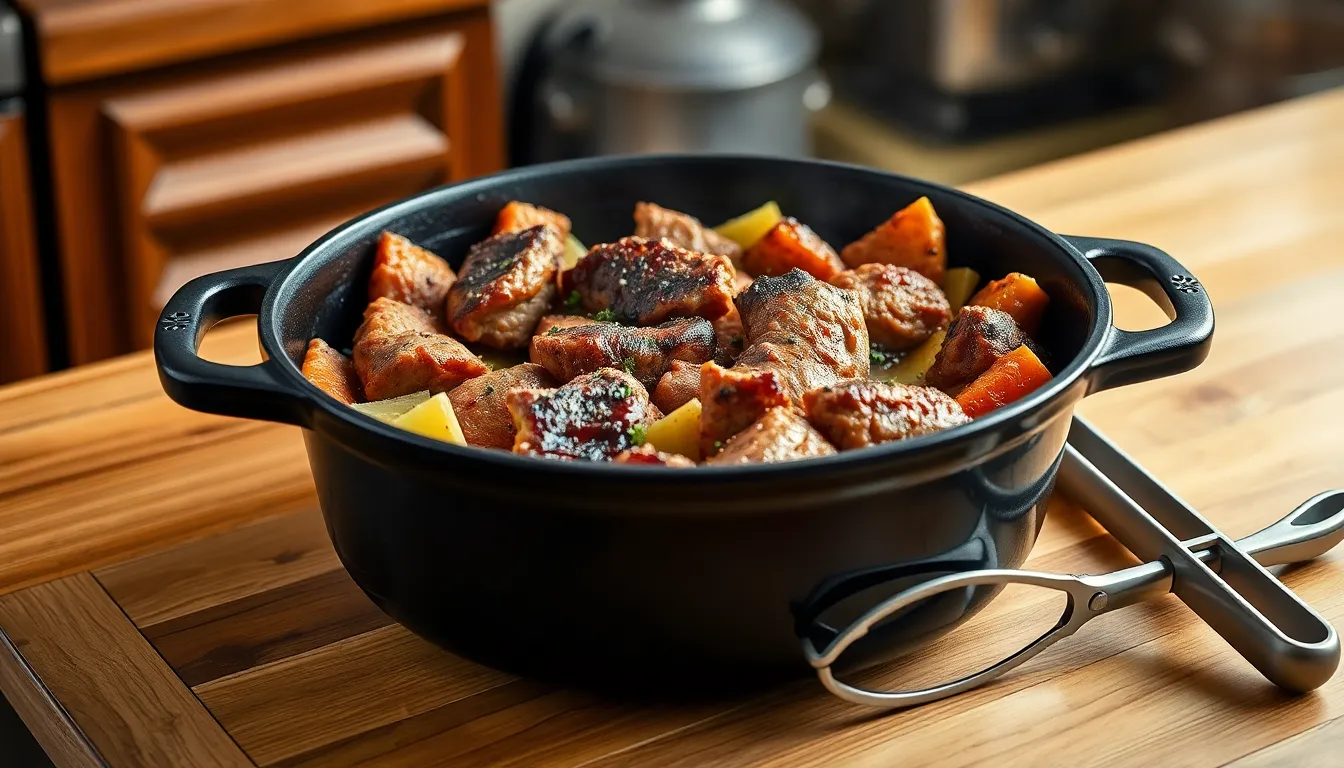
Braising requires specific equipment for optimal results. The right cookware and tools enhance the cooking experience, ensuring dishes come out perfectly tender and flavorful.
Cookware Options
Selecting suitable cookware is crucial. Dutch ovens serve as the gold standard for braising, thanks to their heavy lids and even heat distribution. Casserole dishes made from cast iron or enameled materials also work well. Stainless steel pots provide great alternatives, especially those that can transition from stovetop to oven. Using a heavy skillet can help sear meat effectively before transitioning to a braising pot. Choose vessels with tight-fitting lids to trap moisture during cooking.
Tools and Utensils
Equipping the kitchen with essential utensils streamlines the braising process. Tongs are vital for turning meat and maneuvering it safely. A sturdy wooden spoon aids in sautéing aromatics or deglazing the pan. A ladle assists in adding liquid while a thermometer checks the meat’s doneness. Additionally, measuring cups facilitate accurate liquid additions. Using a fine-mesh strainer becomes beneficial for separating solids from braising liquids before serving. Prioritize using quality tools, which enhance both safety and efficiency.
Types of Braising Techniques
Braising encompasses various techniques, each offering unique benefits and results. Two primary styles stand out: traditional braising and pressure cooking braising.
Traditional Braising
Traditional braising involves searing meat to develop a rich crust before simmering it in liquid. Chefs often use a heavy pot, such as a Dutch oven, to maintain consistent heat. Aromatics like garlic, onions, and herbs enhance the flavor as they meld with the simmering liquid. Low temperatures and longer cooking times yield fork-tender meat, making this method perfect for tough cuts like chuck roast. This technique effectively breaks down connective tissue, resulting in a dish that’s both savory and satisfying.
Pressure Cooking Braising
Pressure cooking braising accelerates the usual braising process while retaining flavor and tenderness. Cooks achieve this by sealing ingredients in a pressure cooker, allowing steam to build and create higher cooking temperatures. Liquid ingredients, such as broth or wine, infuse flavor quickly, ensuring that even tougher cuts turn out tender. Typically, cooking times reduce significantly to 30 to 60 minutes without sacrificing taste. This technique appeals to those seeking flavorful meals without the long wait associated with traditional braising.
Step-by-Step Guide to Braising
Braising requires careful preparation and a well-defined cooking process. Following these steps leads to tender, flavorful results.
Preparing Ingredients
Select the right cuts of meat, such as chuck roast or pork shoulder. Trim excess fat from the meat for a better texture. Dice aromatic vegetables, like onions and carrots, to enhance flavor. Gather herbs and spices; thyme and bay leaves work well. Choose a braising liquid; options include broth, wine, or even coffee for unique flavors. Measure ingredients accurately to ensure balance. Create a cohesive flavor profile by considering each component’s contribution.
Cooking Process
Start by preheating the oven to the desired temperature, typically around 300°F. Use a heavy pot or Dutch oven to maintain even heat. Sear the meat on all sides in hot oil, creating a golden crust. Remove the meat to the side and sauté the aromatic vegetables in the same pot. Deglaze the pot with the chosen liquid, scraping up any flavor bits. Add the meat back into the pot, ensuring it’s partially submerged in the liquid. Cover tightly and transfer to the oven, allowing the dish to cook slowly for several hours. Check periodically, adding liquid if necessary to maintain moisture.
Tips for Perfect Braising
Selecting the right meat is crucial for successful braising. Tough cuts like chuck roast, short ribs, and pork shoulder deliver incredible tenderness after the braising process. Ensuring even browning enhances flavors significantly. Searing meat over high heat creates a rich crust that locks in juiciness.
Using aromatic vegetables adds depth to the dish. Onions, carrots, and garlic not only infuse flavor but also complement the meat. Adding these ingredients after searing allows their natural sweetness to develop fully. Choosing the appropriate liquid is equally important. Broths, wines, or even beer contribute distinct flavors, aiding the overall taste.
Controlling heat is essential throughout cooking. Maintaining a low, steady temperature ensures even cooking and prevents drying out. Covering the pot tightly traps moisture, resulting in moist, tender meat. Checking the pot occasionally helps monitor liquid levels, preventing drying as well.
Timing plays a vital role in achieving the perfect braise. The cooking duration varies based on the cut and size of meat, typically lasting from one to several hours. Testing for doneness should involve a fork; if it easily shreds, the meat is ready. Adjusting cooking times as needed guarantees optimal tenderness.
Incorporating fresh herbs and spices enhances the final flavor profile. Thyme, rosemary, and bay leaves release aromatic oils during cooking, promoting a rich essence. Allowing the braise to rest after cooking intensifies flavors even further, as the juices redistribute throughout the meat.
Experimenting with different combinations of liquors or aromatics can yield unique results. Perfecting braising techniques demands practice, patience, and creativity in the kitchen.
Braising offers a unique way to elevate simple ingredients into mouthwatering meals. Its combination of dry and wet heat not only tenderizes tough cuts of meat but also infuses them with rich flavors. Whether opting for traditional methods or embracing the speed of pressure cooking, this technique caters to various cooking styles and schedules.
With the right equipment and a few essential tips, anyone can master braising. The versatility of this method makes it perfect for both everyday dinners and special occasions. By experimenting with different cuts, liquids, and aromatics, cooks can create an endless array of delicious dishes. Embracing braising is sure to enhance culinary skills and bring joy to the dining table.