
Red velvet cake isn’t just a dessert; it’s a showstopper that demands attention. With its striking red hue and velvety texture, it’s no wonder this cake has stolen the spotlight at birthdays, weddings, and even Tuesday night dinners. But what’s the secret behind that irresistible flavor and eye-catching color?
Overview of Red Velvet Cake
Red velvet cake features a distinctive flavor profile, which blends cocoa, buttermilk, and a hint of vanilla. This unique combination contributes to its rich taste and appealing texture. The vibrant red color primarily comes from red food coloring, though beets can also be used for a natural alternative.
Baking soda plays a significant role in achieving the cake’s light and fluffy consistency, while vinegar enhances the chocolate flavor and reacts with the baking soda. Together, these ingredients create a tender crumb that’s crucial to red velvet cake’s appeal.
Butter or oil provides moisture, ensuring a tender texture. Cream cheese frosting commonly complements red velvet cake, balancing its sweetness with a tangy flavor. This duo adds to the cake’s popularity at celebrations, making it a favorite choice for parties and weddings.
Dusting the cake with cocoa powder or garnishing with nuts can enhance its visual appeal, elevating its presentation. The use of high-quality ingredients increases the overall flavor and texture, impacting the cake’s final outcome.
Overall, red velvet cake’s ingredients work together harmoniously, resulting in a dessert that’s not only visually stunning but also deliciously memorable. Its rich history and popularity make it a classic choice for various occasions.
Key Ingredients of Red Velvet Cake
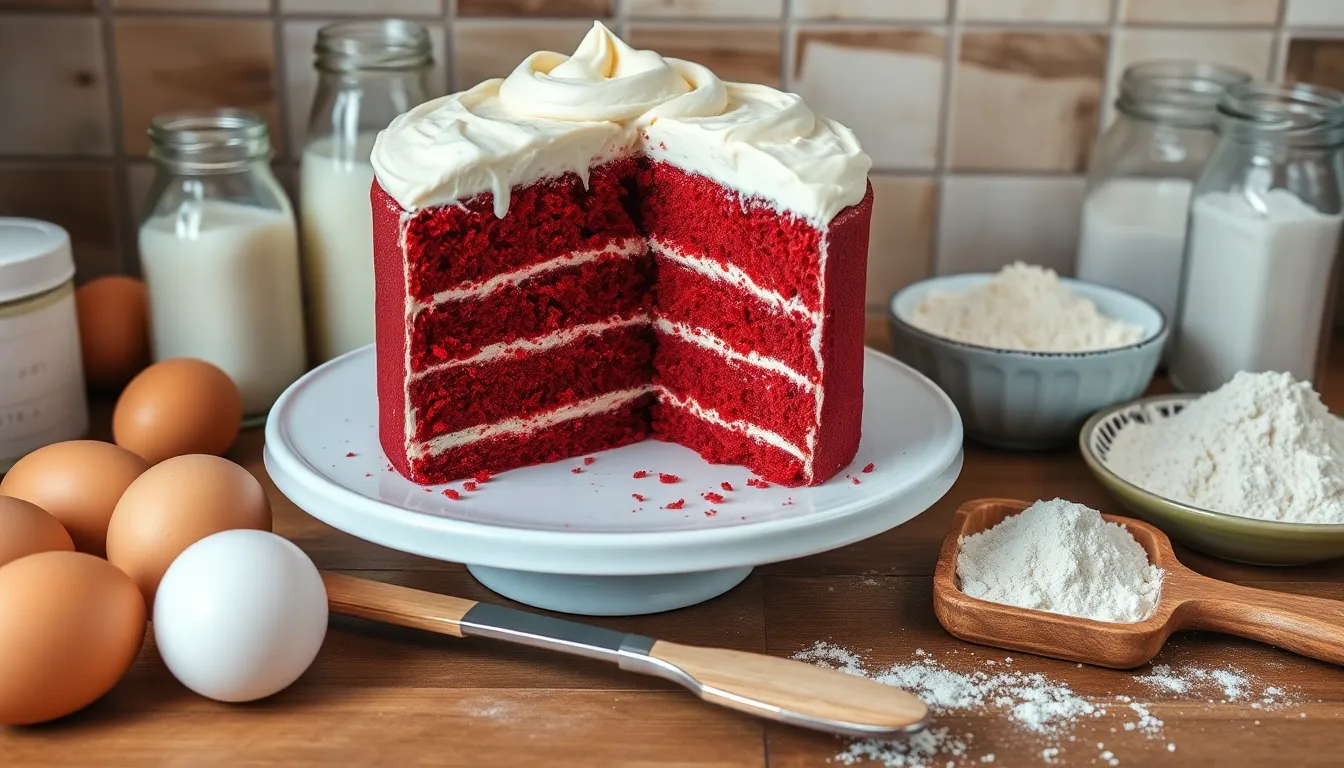
Red velvet cake features a unique combination of ingredients that contribute to its signature flavor and striking appearance. Each component plays a vital role in crafting this delightful dessert.
Flour
All-purpose flour forms the backbone of red velvet cake, providing structure and stability. The recipe typically calls for about 2 to 2.5 cups of flour, depending on the size of the cake. Sifting the flour ensures a lighter texture, reducing clumps and creating a smooth batter. Various recipes might substitute cake flour for a more delicate crumb. Each choice influences the final texture and height of the cake.
Cocoa Powder
Unsweetened cocoa powder adds depth to the cake’s flavor profile. Generally, recipes use 1 to 2 tablespoons for a subtle chocolate undertone. While red velvet cake isn’t primarily a chocolate cake, cocoa powder enhances its complexity. Many bakers opt for Dutch-processed cocoa to achieve a richer taste. This ingredient ultimately contributes to the balanced sweetness that makes red velvet irresistible.
Sugar
Granulated sugar is essential for sweetness and moisture. Most recipes include about 1 to 1.5 cups. Sugar not only sweetens the cake but also aids in creating a tender crumb. It interacts with other ingredients, fostering a balanced flavor. Some versions may incorporate brown sugar for added moisture and caramel notes, enhancing the overall taste of the cake.
Buttermilk
Buttermilk provides acidity, which activates baking soda for leavening. Typically, about 1 cup of buttermilk enriches the batter’s flavor and contributes to its moistness. Using buttermilk results in a tender crumb that many find appealing. Alternatives like yogurt or sour cream can replace buttermilk if needed. This ingredient helps define the texture of the cake, allowing it to rise beautifully.
Eggs
Eggs act as binding agents, incorporating air into the batter for a light consistency. Most recipes require 1 to 3 large eggs, depending on the quantity of cake desired. Eggs contribute richness, flavor, and structure to the final product. Whisking eggs separately before adding them to the mixture ensures even distribution. Each egg impacts the overall texture and moisture of the cake.
Red Food Coloring
Red food coloring is iconic for the cake’s vibrant hue. Recipes often require 1 to 2 tablespoons, but the amount may vary based on personal preference. Some bakers prefer natural alternatives like beet juice for its color and subtle sweetness. The use of food coloring not only creates visual appeal but enhances the overall enjoyment of the dessert. This ingredient truly distinguishes red velvet cake from others.
Additional Ingredients for Flavor
Enhancing the flavor of red velvet cake involves several key ingredients beyond the basics. Vinegar and vanilla extract play significant roles in creating that beloved taste.
Vinegar
Vinegar serves as a powerful ingredient in red velvet cake recipes. Its acidity balances the sweetness of sugar, providing a more complex flavor profile. When combined with baking soda, vinegar creates carbon dioxide, which contributes to the cake’s light and airy texture. This reaction is crucial for ensuring that the cake rises properly during baking. Many bakers opt for white vinegar or apple cider vinegar, both offering similar acidity levels. The small amount used is enough to enhance the cake without overpowering other flavors.
Vanilla Extract
Vanilla extract significantly enriches the overall flavor of red velvet cake. It adds a warm sweetness that complements the cocoa and buttermilk. Many recipes call for pure vanilla extract rather than imitation to ensure a depth of flavor. A teaspoon or two is usually sufficient to impact the cake’s taste without overwhelming it. The aromatic quality of vanilla brings balance, making each bite more enjoyable. Often, the combination of vanilla with other ingredients contributes to the cake’s signature appeal at celebrations.
Nutritional Aspects of Red Velvet Cake
Red velvet cake, while delicious, contains several nutritional considerations. Each slice offers a delightful blend of flavors, but it’s essential to be aware of the calories involved. Typically, one slice of red velvet cake contains around 350 calories. High sugar content contributes to this calorie count, with granulated sugar providing necessary sweetness.
Fats in the cake mainly come from butter or oil, essential for moisture and a tender texture. This adds approximately 15 grams of fat per slice, which can impact daily intake.
Carbohydrates play a significant role in red velvet cake, primarily from all-purpose flour and sugar. Each slice can contain about 40 grams of carbohydrates, making it a source of quick energy.
Protein is present but in lower amounts. Eggs contribute to approximately 5 grams of protein per slice, helping with structure and texture.
Fiber content remains minimal due to the lack of whole grains in the recipe. Most cakes, including red velvet, provide less than 1 gram of dietary fiber.
Consideration for dietary restrictions is important. Those with gluten sensitivities might opt for gluten-free flour substitutes. Additionally, the cake can cater to those looking for lower sugar options through alternative sweeteners.
By understanding these nutritional aspects, individuals can enjoy red velvet cake responsibly, balancing indulgence with health considerations.
Red velvet cake stands out not just for its striking appearance but also for its delightful flavor profile. Each ingredient contributes to its unique characteristics making it a beloved choice for celebrations. From the rich cocoa to the tangy buttermilk and the iconic red hue, every component plays a vital role in creating this classic dessert.
Understanding the main ingredients allows bakers to appreciate the balance of flavors and textures that make red velvet cake so special. As they experiment with recipes or explore healthier alternatives, the essence of this cake remains a cherished part of culinary traditions. Whether served at a birthday party or a wedding, red velvet cake continues to bring joy and satisfaction to all who indulge in it.